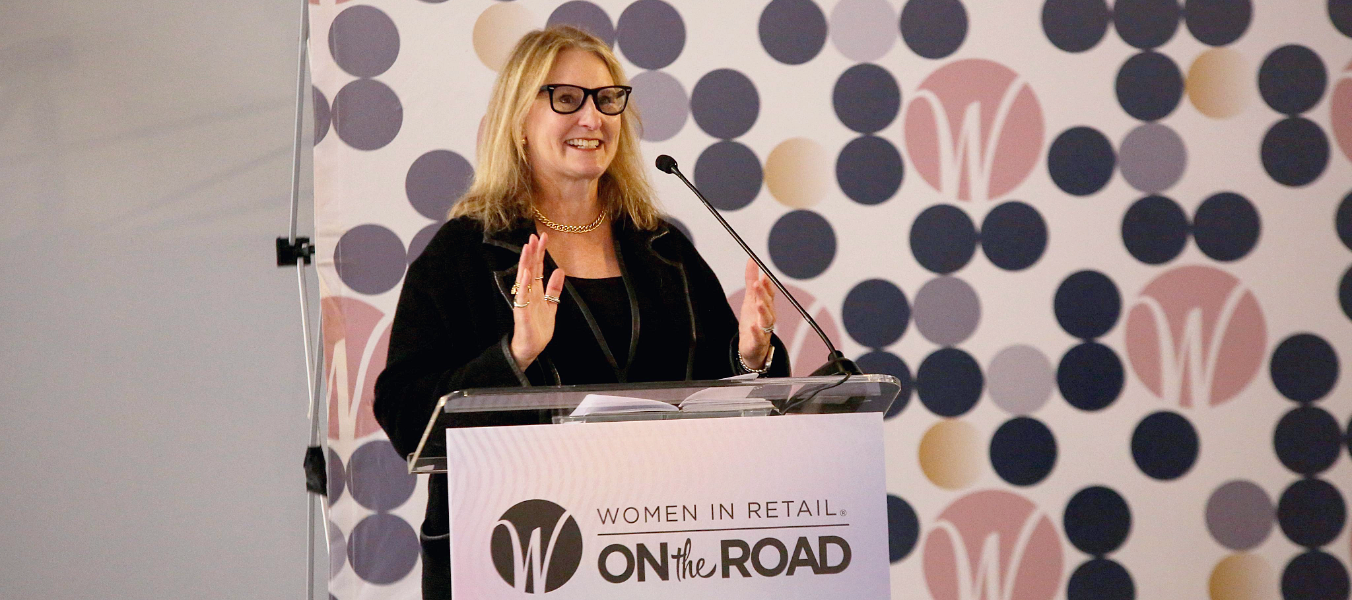
After decades working with major brands, Kecia Hielscher chose business ownership. The Formulary 55 owner talks about fear, risk, leadership, cash flow and why experience can be an advantage for women who become entrepreneurs later in their careers.
Key Takeaways
- Kecia Hielscher did not enter entrepreneurship without experience; she brought decades of customer, merchandising, product-development and leadership knowledge with her.
- Purchasing an established company allowed her to build on an existing customer base and brand rather than begin completely from zero.
- Ownership made financial decisions, especially cash flow, much more immediate and personal.
- She believes experienced women often underestimate how much of their corporate knowledge transfers to entrepreneurship.
- Some of her hardest decisions have involved saying no to opportunities that offered short-term revenue but did not fit the brand.
- Her advice to women considering entrepreneurship later in their careers is simple: experience is an advantage, but eventually you have to act.
There is a persistent image of the entrepreneur as someone who starts a company in their twenties with little more than an idea and a willingness to take risks.
That is one path. It is far from the only one.
Kecia Hielscher came to full-time business ownership after decades spent learning inside major companies, including Nordstrom, Williams-Sonoma and Disney. When she acquired Formulary 55, she was not discarding that career. She was carrying the parts of it that mattered into something she could finally call her own.
Her story is particularly relevant for women who have spent years building careers and wonder whether they have waited too long to become entrepreneurs. The U.S. Small Business Administration operates a nationwide network of Women’s Business Centers offering counseling and training for women starting and growing companies.
>> ALSO READ: Beyond the personal transition from corporate executive to entrepreneur, Hielscher also brought years of lessons from Nordstrom, Williams-Sonoma and Disney into her new role; LearningFromBigBoys explores how those big-company practices translate to running a smaller brand
Experience does not eliminate the uncertainty of entrepreneurship. What it can provide is a deeper toolbox for dealing with it.
In this interview, Hielscher talks about buying Formulary 55, learning to trust herself as the person making the final decision, adjusting to the financial realities of a small company and redefining what success means at this stage of her career.
Table of Contents

Q&A With Kecia Hielscher, Owner, CEO and Chief Creative Officer of Formulary 55
1. After spending decades working for major companies, when did you first seriously consider owning a business yourself?
Entrepreneurship had been a through-line in my life long before Formulary 55. Even while building my corporate career, I had started a consulting business, a jewelry business and a couple more and always had that instinct to create something of my own.
Eventually, I reached the point where I pushed past fear, leaned into courage and was ready to bet fully on myself, saying, “Why not me? Why not now?” and took the leap of faith.
2. What made you decide to purchase an existing company rather than launch your own brand from the beginning?
I was not looking simply to put my name on something. I was interested in finding a business with authenticity, untapped potential and something I could be very proud of.
Formulary 55 already had customers, history and wonderful products. I saw an opportunity to respect that foundation and build something much larger from it.
Buying an existing company is a distinct path into entrepreneurship, and the SBA recommends examining the company’s finances, contracts, leases, inventory and existing infrastructure before making a purchase. PowerHomeBiz also looks at the differences between starting from scratch, purchasing an existing business and buying a franchise.
3. Was leaving the structure and resources of large corporations difficult? What felt most different once the final decision rested with you?
Absolutely. In a large company, there is always a department, expert or resource somewhere in the organization.
As an owner, eventually every road leads back to you, and sometimes you are making a major strategic decision in the morning and solving a very ordinary operational problem that afternoon. The final decisions, both successful and not, are now mine to make and own. That’s an entirely different feeling that carries a lot of weight.
4. Did you ever have a moment after buying Formulary 55 when you wondered whether you had made the right decision?
Of course. I think most entrepreneurs have those moments.
I have learned not to interpret uncertainty as a signal to stop; sometimes it simply means you are doing something you have never done before. You also need to trust your gut, as my mom would always say, and I did throughout the journey using what I called the “greenlights” method — thank you, Matthew McConaughey, from his book Greenlights that I was reading at the time!
Keep going if the signal was green. If a yellow came up, review and decide if I continued. If a red light showed up, then it was over. There were no red lights.

5. What skills from your corporate career turned out to be most valuable as an entrepreneur?
Understanding the customer, product development, merchandising, financial discipline and building teams.
I was fortunate to work for premium companies that believed in the customer as the North Star and in the details to ensure the product and the story were the absolute best they could be before we launched them. My retail career taught me to look at a business both creatively and commercially.
Beautiful ideas still have to sell.
Her comments echo an idea explored on LearningFromBigBoys: small companies may not have the resources of retailers such as Nordstrom, but they can still study how larger companies approach customer experience, communication and loyalty.
6. What did corporate life not prepare you for about owning a small business?
How personal everything becomes.
Cash flow is not an abstract financial metric when it is your company. A bad inventory decision, an equipment problem or an unexpected cost is not absorbed somewhere inside a giant organization; you feel it immediately.
7. How has your relationship with risk changed now that it is your own money, company and employees affected by the decisions you make?
I am actually much clearer about risk now.
When your own money and your employees’ livelihoods are involved, you learn to distinguish between a thoughtful risk and an emotional gamble. I am willing to take meaningful risks, but I want to understand what we are betting on and why.
8. You have taken over a company with an existing identity rather than creating something entirely around yourself. How have you made the business your own while respecting what previous customers already loved about it?
I never wanted to erase its history.
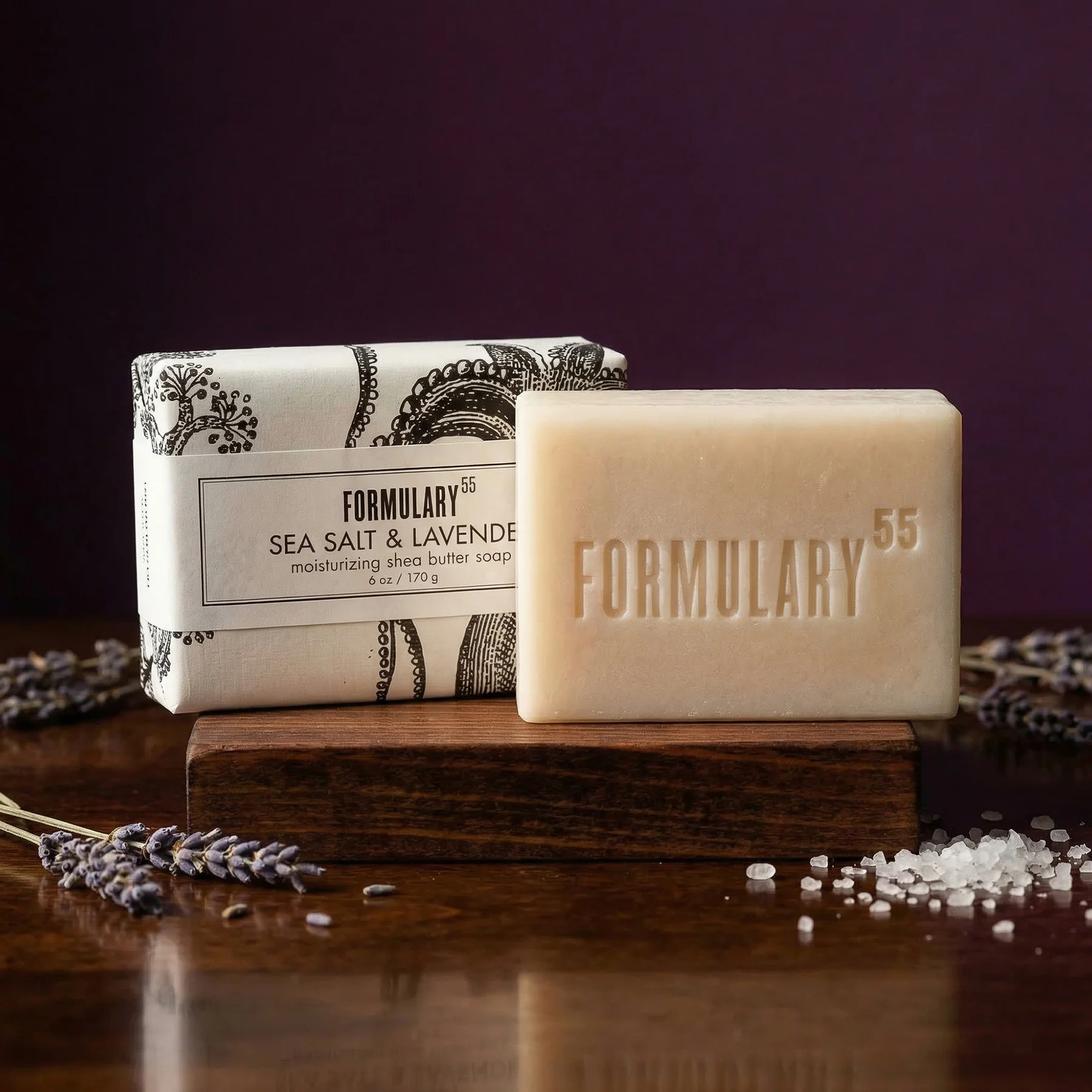
I have worked very hard to identify the soul of the brand and protect it while making everything surrounding it more intentional and better overall: our design, fragrances, product assortment, clean standards, manufacturing story and ultimately the world we are building around Formulary 55.
The company’s current About page continues to emphasize its handmade production in Colorado and the product qualities that existed before Hielscher’s acquisition.
9. What has been the hardest leadership decision you have made since becoming the owner?
The hardest leadership decision has often been knowing when to say no and being willing to walk away.
A glamorous opportunity or a large retailer can bring meaningful revenue and new customers, but if the placement is not right for the brand, the long-term cost can be greater than the short-term gain.
There are two pivotal opportunities I declined that were especially difficult at the time. Looking back, I am grateful I protected the brand equity and the tier in which we want to compete.
Formulary 55 is stronger because I said no.
10. What part of entrepreneurship has been more rewarding than you expected?
The team.
We have tripled our employee count over the past two years, and seeing talented people care deeply about something I am building has been incredibly rewarding. Creating jobs and knowing our growth can have a positive impact in Pueblo makes the business feel much bigger than me.
11. Do you think women who have spent many years in corporate careers sometimes underestimate how transferable their experience can be to entrepreneurship?
Absolutely.
Years spent solving problems, managing people, understanding customers, navigating difficult conversations and making decisions are enormously transferable. You may not know every mechanics-of-small-business answer on day one, but you know far more than you think you do.
Women who want guidance on the mechanics Hielscher refers to can also use SBA resource partners such as Women’s Business Centers, Small Business Development Centers and SCORE for free or low-cost counseling.
12. What would you tell a woman in her 40s, 50s or later who has always worked for someone else but is considering buying or starting a business?
Bet on yourself.
Do not convince yourself that you need to know everything before you begin; you do not. Experience is an advantage, and at some point you have to move past fear, trust what you know, ask for help with what you do not, listen to your gut and just do it.
StartingUpTips makes a related point in its advice for people moving from employment into entrepreneurship: research the business carefully, understand the market and know what you are getting into, but do not expect to know everything before you begin.
13. What is one mistake you have made as a business owner that taught you something you could not have learned in your corporate career?
My early mistake was assuming that watching the profit-and-loss statement closely was enough.
Corporate life did not teach me how constant and personal cash-flow management is because entire departments handled it, and it rarely reached executive meetings unless there was a serious problem.
Now I review the P&L every month and cash flow at least weekly, get into the details of where money is being spent and maintain a cushion for the unexpected, because the unexpected always happens.
A Plan B and a cash-flow cushion are essential to the health of the business and, frankly, to my sanity.
StartingUpTips offers additional practical ideas for entrepreneurs trying to improve small-business cash flow and maintain enough working capital for everyday operations.
14. What does success look like for you now compared with how you defined success earlier in your career?
Earlier in my career, success was often defined by the next position or professional milestone.
Today, it is much broader: building a profitable company, creating an exceptional team, continuing to grow without compromising what we stand for and creating something with lasting value.
My ambition has not become smaller; my definition of success has become bigger, more well-rounded and not about me.
15. What is something about owning Formulary 55 that people looking at the brand from the outside would never know?
How much human touch is behind what they see.
We are not simply designing products and sending them somewhere else to be made. There is a team in Pueblo, Colorado, producing in small batches, pouring, finishing, wrapping, labeling and boxing products by hand.
That humanity is part of the beauty of Formulary 55. We fondly say “from our hands to yours.” We care deeply about what we make and the Formulary 55 world we are creating.
Experience Doesn’t Expire When You Become an Entrepreneur
One of the easiest traps for someone leaving a long corporate career is assuming that entrepreneurship requires starting over professionally.
Hielscher’s experience suggests almost the opposite.
The company may be different. The resources may be smaller. The financial consequences may feel much more personal. But the years spent learning how customers think, managing people, reviewing numbers, developing products and navigating difficult decisions do not suddenly stop being useful because the title on your business card changes.
For women considering entrepreneurship later in their careers, the challenge may be less about acquiring an entirely new identity and more about recognizing how much they already know — and becoming comfortable being the person who ultimately has to make the call.
For a closer look at the business lessons behind the Formulary 55 acquisition, PowerHomeBiz examines how Hielscher has approached brand stewardship, distribution and profitable growth.